Overview
The London School of Economics and Political Science (LSE) is a public research university in London, England, and a member institution of the University of London. The school specialises in pure and applied social sciences. Founded in 1895 by Fabian Society members Sidney Webb, Beatrice Webb, Graham Wallas and George Bernard Shaw, LSE joined the University of London in 1900 and offered its first degree programmes in 1901. In 2008, LSE began awarding degrees in its own name and became a university in its own right within the University of London in 2022.
LSE first opened its doors in 1895 in three rooms in 9 John Adam Street, close to the Strand in central London. During its first year, 300 students enrolled for courses including economics, statistics, and political science. The founding purpose — "for the betterment of society" — remains LSE's guiding mission 130 years later. In 2024, LSE was named Times/Sunday Times University of the Year for 2025.
The School offers over 40 undergraduate programmes and over 140 taught and research postgraduate programmes. LSE's academic profile spans a wide range of social science disciplines, from accounting to law, management to social policy. The student community at LSE is one of the most internationally diverse in the world, with students from over 140 countries registered each year — only 32% of full-time undergraduates come from Britain itself, while 49% originate from beyond Europe across over 120 nations. Grokipedia
Analysis of UK university alumni in 2025 showed that LSE had the highest proportion of business leaders — CEOs, company founders, and managing directors — among its graduates on LinkedIn at 19%. Since 1990, LSE has educated 24 prime ministers or presidents, the second highest number of any university in the United Kingdom. Since its establishment in 1895, over 40 world leaders have taught or studied at LSE. As of 2025, LSE is affiliated with 21 Nobel laureates. LSE has over 50 fellows of the British Academy on its staff.
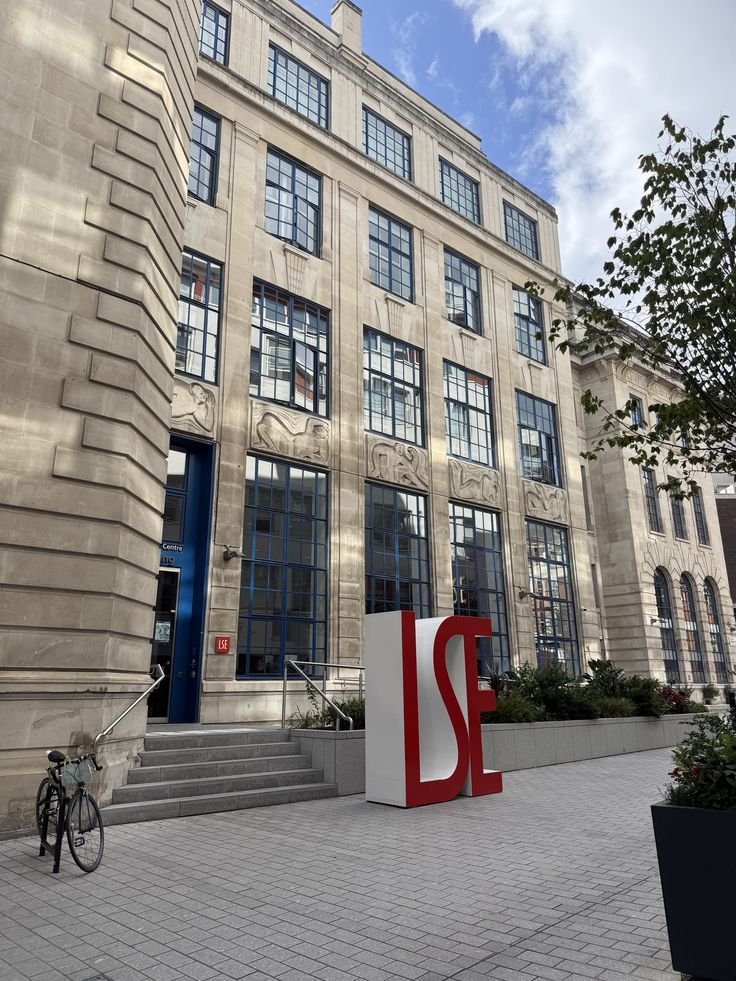
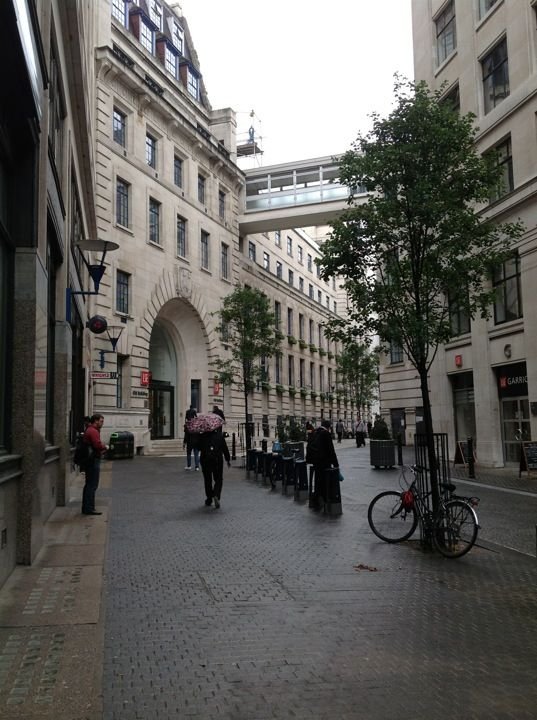
LSE is located in the London Borough of Camden and Westminster, Central London, near the boundary between Covent Garden and Holborn in the area historically known as Clare Market. Its compact campus is packed with facilities — including the world-renowned British Library of Political and Economic Science, the Saw Swee Hock Student Centre, the Sir Arthur Lewis Building, and the recently completed Marshall Building at 44 Lincoln's Inn Fields. Major attractions such as Theatreland, Trafalgar Square, the Royal Opera House, and the British Museum are all within walking distance.
Notable alumni include Ursula von der Leyen (President of the European Commission), George Soros (billionaire investor), B.R. Ambedkar (chief architect of India's constitution), Mick Jagger (attended LSE), President Alexander Stubb of Finland, W. Arthur Lewis (first Black Nobel laureate in Economics), and 21 Nobel Prize winners in total.
| ~8–10% Acceptance Rate | 13,000 Total Students | 140+ Countries Represented | Founded 1895 — 130 Years of Social Science Leadership |
Ranking
LSE has been ranked top three in the UK and fifth in the world for Social Science and Management subjects in the QS World University Rankings by Subject 2026. LSE is ranked in the top five globally in four subjects: Geography (2nd); Development Studies (4th); Social Policy and Administration (4th); and Politics and International Studies (5th). The School also appeared in the top ten globally for Communication and Media Studies (6th); Economics and Econometrics (6th); Sociology (6th); Accounting and Finance (8th); Anthropology (8th); Philosophy (8th); Law (9th); History (10th) and Marketing (10th).
LSE ranks #56 in the QS World University Rankings 2026, and #52 in the Times Higher Education World University Rankings 2026. In UK-specific rankings, LSE has been ranked #1 in the UK by the Times and Sunday Times Good University Guide 2026 — its highest domestic ranking — and #3 in the Complete University Guide 2026. In the Guardian University Guide 2026, LSE is ranked #4 overall and #1 in the UK for Business and Management.
| Ranking Body | Rank |
|---|---|
| QS World University Rankings 2026 | #56 Globally / #4 in UK |
| Times Higher Education (THE) 2026 | #52 Globally |
| Times & Sunday Times Good University Guide 2026 | #1 in the UK |
| Complete University Guide 2026 | #3 in the UK |
| Guardian University Guide 2026 | #4 in the UK / #1 for Business & Management |
| QS — Social Sciences & Management 2026 | #5 Globally / Top 3 in UK |
| QS — Geography | #2 Globally |
| QS — Development Studies | #4 Globally |
| QS — Social Policy & Administration | #4 Globally |
| QS — Politics & International Studies | #5 Globally |
| QS — Economics & Econometrics | #6 Globally |
| QS — Law | #9 Globally |
| QS Masters in Finance (QS 2026) | #7 Globally |
| Nobel Laureates (alumni & staff) | 21 total (1925–2024) |
Intakes
LSE follows the UK academic calendar with a single primary annual intake:
- September/October Intake — The only intake for all undergraduate and most postgraduate programs
Application Deadlines:
| Level | Application Deadline | Platform |
|---|---|---|
| Undergraduate (all students) | January 29, 2026 (UCAS deadline) | Via UCAS only (lse.ac.uk does not accept direct UG applications) |
| Postgraduate Taught (MSc / LLM / MPA) | Rolling from October — most programs close January–March | LSE online application portal |
| Postgraduate Research (MPhil / PhD) | Rolling — contact department | LSE online portal + supervisor contact |
| Executive MSc programs | Program-specific — check individual course page | LSE online portal |
Note: LSE receives all undergraduate applications via UCAS. International students require a UK Student Visa (formerly Tier 4). Apply as early as possible — most popular postgraduate programs at LSE close well before the official final deadline. Application fee: none for most programs. Verify at lse.ac.uk/study-at-lse.
Top Courses
LSE's academic profile spans a wide range of social science disciplines across over 40 undergraduate programmes and over 140 taught and research postgraduate programmes — making it the world's largest graduate school for social sciences. Disciplines include accounting, actuarial science, anthropology, development studies, economic history, economics, environment and climate change, finance, geography, government, health policy, history, international relations, law, management, mathematics, philosophy, population studies, psychology, social policy, sociology, and statistics.
Key departments and flagship programs include:
Department of Economics:
- BSc Economics (3 years — one of the most competitive in the world)
- BSc Economics and Statistics, BSc Mathematics and Economics
- MSc Economics, MSc Economic History, MSc Econometrics and Mathematical Economics
- PhD in Economics
Department of Government:
- BSc Government, BSc Government and Economics, BSc Government and History
- MSc Comparative Politics, MSc Political Science and Political Economy
- MSc International Relations, MSc Political Theory, MSc Public Policy
Department of Law:
- LLB in Law (3 years — #9 globally QS 2026)
- LLM in Law (general and specialisations — Corporate, International, Human Rights, European)
- MSc Law and Finance (joint with Finance)
Department of Finance / Accounting:
- BSc Accounting and Finance (#8 globally — QS 2026)
- MSc Finance (#7 globally — QS Masters in Finance)
- MSc Financial Mathematics
- MSc Accounting and Finance
Department of International Development:
- BSc International Development (#4 globally — QS Development Studies)
- MSc Development Studies, MSc Development Management, MSc Health and International Development
Department of Geography and Environment:
- BSc Geography (#2 globally — QS 2026)
- MSc Environment and Development, MSc Environmental Economics and Climate Change
- MSc Urban Policy and Development
Department of Sociology:
- BSc Sociology, BSc Social Policy (#4 globally — QS Social Policy)
- MSc Sociology, MSc Social Policy, MSc Gender
Department of Management:
- BSc Management (BSc Management)
- MSc Management (MiM — highly selective)
- MSc Human Resources and Organisations, MSc Marketing, MSc Organisational and Social Psychology
Department of Statistics / Mathematics:
- BSc Statistics, BSc Mathematical Economics
- MSc Statistics, MSc Data Science
School of Public Policy:
- Executive MSc in Public Policy (EMPP)
- MPA in Public Administration
- MSc in Global Politics
Cost of Studying at The London School of Economics and Political Science (LSE)
LSE tuition fees for international students are generally higher than the average at other top universities. LSE recommends budgeting up to £1,400 per month for living expenses. LSE halls start at £100 per week for a shared, self-catered room. The university guarantees accommodation for all first-year undergraduate students who apply before the deadline.
The LSE Master in Management (MiM) tuition fee for 2025–26 is £41,000. The MSc Finance tuition is £38,000 for 2025. Living costs in London range between £1,400–£1,600 per month for a student.
| Type of Expense | Annual Cost (GBP) | Annual Cost (INR Approx.) |
|---|---|---|
| Tuition Fees — BSc (Overseas / International) | £22,430 – £24,408/year | ₹23,97,000 – ₹26,10,000 |
| Tuition Fees — MSc / LLM (Overseas) | £26,000 – £43,000/year | ₹27,82,000 – ₹46,01,000 |
| Tuition Fees — MSc Finance / MiM (Premium) | £38,000 – £41,000/year | ₹40,66,000 – ₹43,87,000 |
| Tuition Fees — MPhil / PhD (Overseas) | £22,000 – £27,000/year | ₹23,54,000 – ₹28,89,000 |
| Student Services Levy | £376/year | ₹40,200/year |
| Accommodation (LSE Halls — single room) | £6,000 – £13,000/year | ₹6,42,000 – ₹13,91,000 |
| Food & Personal Expenses | £5,000 – £8,000/year | ₹5,35,000 – ₹8,56,000 |
| Transport (London TfL — Oyster card) | £1,500 – £2,500/year | ₹1,61,000 – ₹2,68,000 |
| Books & Study Materials | £500 – £1,000/year | ₹53,500 – ₹1,07,000 |
| Health (NHS surcharge — international) | £776/year | ₹83,000/year |
| Total Estimated Annual Cost | £35,000 – £55,000 | ₹37,45,000 – ₹58,85,000 |
Note: London is one of the world's most expensive cities. International undergraduate students are charged the "Overseas" fee rate. Fees are reviewed annually and increase each year. Verify at lse.ac.uk/study-at-lse/undergraduate/fees-and-funding or lse.ac.uk/study-at-lse/graduate/fees-and-funding.
Scholarships
To help offset costs, LSE offers various scholarships to support students. The Graduate Support Scheme awards £5,000–£15,000 based on financial need. Merit-based scholarships, like the Graduate Merit Awards, recognise academic excellence with awards of £5,000–£10,000.
LSE offers 74 different scholarship types supporting international and domestic students. LSE awards significant financial support to its undergraduate students and in recent years has offered one of the most generous bursary packages in UK higher education. Awards include the LSE Bursary, the Undergraduate Support Scheme, the LSE Accommodation Bursary, and the Care Experienced and Estranged Student Bursary.
Key scholarships for international students:
| Scholarship | Type | Value |
|---|---|---|
| LSE Graduate Support Scheme | Need-based | £5,000 – £15,000 (partial tuition/living support) |
| LSE Graduate Merit Award | Merit-based | £5,000 – £10,000 for outstanding academic achievers |
| LSE Undergraduate Bursary | Need-based | Up to £5,000/year for students from lower-income backgrounds (UK) |
| LSE-Chevening Scholarship | UK Government (merit + leadership) | Full tuition + living stipend + return airfare (1-year Masters) |
| Commonwealth Scholarship | Commonwealth government-funded | Full tuition + living allowance for Commonwealth students |
| LSE PhD Studentships | Research excellence | Full tuition + living stipend for exceptional doctoral candidates |
| LSE Annual Fund Scholarships | Alumni-funded | Various amounts — awarded competitively to outstanding students |
| Taught Masters Award (departmental) | Faculty-specific | Varies by department — typically £5,000–£20,000 |
| GREAT Scholarships (British Council — India) | Bilateral (India-UK) | £10,000 minimum toward tuition for Indian students on eligible PG programs |
Admissions
LSE maintains extremely high academic standards with an acceptance rate of approximately 8–10%, making it one of the most selective institutions in the world. Typical undergraduate offers are A*AA–AAB at A-level or IB 37–38 points or above. Competition remains fierce across all programs.
For Undergraduate Programs (BSc — 3 years):
- A-Level: Typically AAA to AAA depending on program (Economics requires AAA)
- International Baccalaureate (IB): 37–39 points with specific Higher Level subject requirements
- Indian students (Class 12 CBSE/ISC): 90–95%+ with strong performance in relevant subjects
- IELTS 7.0 overall (no band below 6.5) / TOEFL iBT 107 for most programs; IELTS 7.5 for some
- Application via UCAS only (UCAS deadline: January 29, 2026 for 2026 entry)
- Personal Statement (1 page on UCAS) and academic reference letter required
For Postgraduate Programs (MSc / LLM):
Students must meet the entry requirements: a minimum 2:1 UK equivalent degree (around 65%+ in Indian universities), and IELTS score of 7.0 overall. For premium programs like MSc Finance, a GMAT score of 680+ is required.
- Bachelor's degree with minimum 2:1 Hons equivalent (65–70%+ in Indian universities; elite programs require 70–75%+)
- IELTS 7.0 (no band below 6.5) / TOEFL iBT 107 for most programs; IELTS 7.5 for some
- GMAT 680+ for MSc Finance and MSc Management (MiM) programs
- Personal statement / statement of purpose (1,000 words)
- 2 Academic References (professional references also accepted for some programs)
- CV / Résumé
- Certified academic transcripts
For MPhil / PhD Programs:
- Master's degree with strong research record
- Research proposal (3,000–5,000 words for most departments)
- Supervisor agreement recommended before applying
- IELTS 7.0–7.5 / TOEFL iBT 107+
- 2 Academic References
Placements
Analysis of UK university alumni in 2025 showed that LSE had the highest proportion of business leaders — CEOs, company founders, and managing directors — among its graduates on LinkedIn at 19%, confirming its extraordinary track record for producing global business leaders.
LSE has strong connections with top companies in finance and consulting. According to official data, graduates report a median salary of £38,000 within 15 months of graduation. Most students are placed within three months of completing the program. Common job titles include analyst, associate, and consultant at leading global firms. Top recruiters include Deloitte, BCG, Amazon, and major investment banks.
For MSc Finance graduates specifically, the average starting salary ranges between £60,000 and £80,000 depending on the role and location. Employers include investment banks, consulting firms, and major financial institutions. LSE's strong employer network helps students find jobs faster and build long-term careers in finance.
LSE's location in Central London — Europe's financial capital and one of the world's most important centres for international policy, law, media, and commerce — gives graduates unparalleled proximity to their future employers. The school's LSE Careers team provides job boards, career workshops, employer events, and 1-to-1 coaching.
Key career sectors for LSE graduates:
- Finance & Investment Banking — Goldman Sachs, J.P. Morgan, Morgan Stanley, HSBC, Barclays, Deutsche Bank, BlackRock, Blackstone
- Consulting & Strategy — McKinsey, BCG, Bain, Oliver Wyman, Deloitte, PwC, KPMG, EY
- International Organisations & Policy — United Nations, World Bank, IMF, European Commission, OECD, UK Government, UK Parliament
- Law — Magic Circle firms (Linklaters, Clifford Chance, Allen & Overy, Freshfields, Slaughter & May), top global law firms
- Technology & Media — Amazon, Google, Meta, Bloomberg, Reuters, The Economist, BBC
- Academia & Research — Leading global universities, think tanks (Chatham House, Brookings), research councils
Jobs After Graduating from LSE
| Job Profile | Average Annual Salary (GBP) | INR Approx./Year |
|---|---|---|
| Investment Banker / Financial Analyst | £60,000 – £120,000 | ₹64,20,000 – ₹1,28,40,000 |
| Management Consultant | £55,000 – £100,000 | ₹58,85,000 – ₹1,07,00,000 |
| Economist / Policy Analyst | £45,000 – £90,000 | ₹48,15,000 – ₹96,30,000 |
| Lawyer / Solicitor (Magic Circle) | £50,000 – £120,000 | ₹53,50,000 – ₹1,28,40,000 |
| Data Scientist / Quantitative Analyst | £55,000 – £100,000 | ₹58,85,000 – ₹1,07,00,000 |
| International Development Specialist | £40,000 – £75,000 | ₹42,80,000 – ₹80,25,000 |
| MSc Finance Graduate (average starting) | £60,000 – £80,000 | ₹64,20,000 – ₹85,60,000 |
| Public Policy / Government Officer | £40,000 – £80,000 | ₹42,80,000 – ₹85,60,000 |
| Academic Researcher / Lecturer | £40,000 – £70,000 | ₹42,80,000 – ₹74,90,000 |
| Overall Median Salary (within 15 months) | £38,000 | ₹40,66,000 |
Note: Salary figures are indicative annual gross values in GBP. Actual salaries vary by role, employer, and industry. London finance and consulting roles frequently offer significant bonuses in addition to base salary. International graduates may apply for a UK Graduate Route visa, allowing 2 years of post-study work in the UK.
For personalised guidance on LSE admissions, scholarships, and the UK student visa process, connect with the experts at Polygon Campus today.