Overview
Harvard University, established in 1636, is the oldest institution of higher learning in the United States. Located in Cambridge, Massachusetts, it has grown over nearly four centuries into one of the most influential universities in the world, built on an unwavering commitment to the pursuit of knowledge, innovation, and public service.
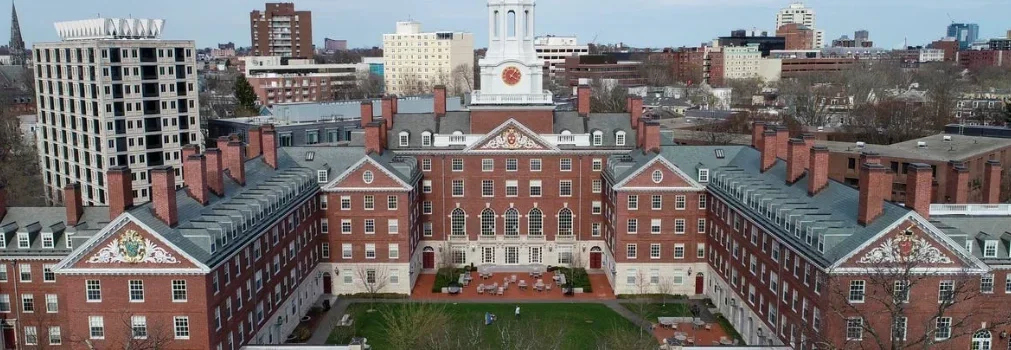
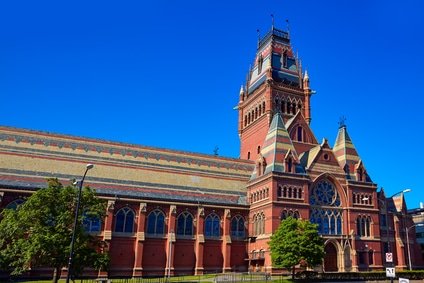
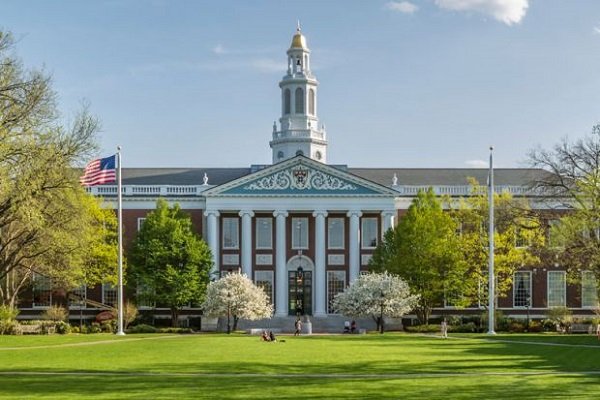
Harvard's 209-acre main campus is home to 10 degree-granting schools in addition to the Radcliffe Institute for Advanced Study, two theaters, and five museums. The university also maintains a significant presence in Boston's Longwood and Allston neighborhoods.
Today, Harvard has 24,519 undergraduate and graduate students, more than 20,667 faculty and staff, and over 400,000 alumni spread across the globe. The university operates through 12 degree-granting schools, offering over 3,700 courses, 50+ undergraduate concentrations, and 135+ graduate degree programs.
Harvard's alumni community is a testament to its extraordinary legacy — it counts eight US presidents, several foreign heads of state, 62 living billionaires, 359 Rhodes Scholars, and 242 Marshall Scholars among its graduates. Whether it be Pulitzer Prizes, Nobel Prizes, or Academy Awards, Harvard graduates have won them, and students and alumni together have taken home 108 Olympic medals.
Harvard's endowment stands at USD 56.9 billion as of 2025, reflecting the university's immense institutional strength and commitment to sustaining world-class education for generations to come.
| 3.5% Acceptance Rate | 6,749 International Students | 400,000+ Alumni Worldwide | $56.9B Endowment |
Ranking
Harvard University is one of the most decorated institutions in the history of global higher education rankings.
Harvard secured the 5th position in QS World University Rankings 2026, and holds the 3rd position in Times Higher Education (THE) World University Rankings 2025. The university has also been placed at #1 globally by US News & World Report.
In QS World University Rankings by Subject 2025, Harvard ranked #1 across four major subject areas: Arts & Humanities, Natural Sciences, Life Sciences & Medicine, and Social Sciences & Management. According to Times Higher Education 2025 subject rankings, Harvard achieved #1 in both Engineering and Life Sciences.
Harvard is among just four universities in the world — alongside MIT, Stanford, and UC Berkeley — to earn a perfect score of 100 in employer reputation in the QS World University Rankings.
Intakes
Harvard University offers two major intake periods each year — Fall and Spring — for students applying to its programs.
- Fall Intake (September) — Primary intake; most graduate programs admit students exclusively for this term
- Spring Intake (January) — Available for select programs
For the Fall semester, the application deadline typically falls in early January. For the Spring semester, the deadline is usually in early November.
Note: Polygon Campus primarily assists with graduate-level program admissions. Students are encouraged to verify intake availability for their specific program directly with the respective Harvard school.
Top Courses
Harvard is organized through 11 major academic faculties. Key schools include the John A. Paulson School of Engineering and Applied Sciences (SEAS), Harvard T.H. Chan School of Public Health, and the Faculty of Arts and Sciences — the largest faculty at Harvard.
Harvard offers more than 3,700 undergraduate and postgraduate courses across 13 schools, spanning a wide range of disciplines including STEM (Computer Science, Biotechnology, Engineering, Mathematics), Business & Economics (MBA, Economics, Public Policy), Law & Social Sciences (Law, Psychology, Government), and Medicine & Health (Medical Sciences, Global Health, Neuroscience).
Some of the most sought-after programs for international students include:
-
Master of Science (MS) — Computer Science, Data Science, Biomedical Informatics
-
MBA — Harvard Business School
-
Master in Public Administration / Public Policy — Harvard Kennedy School
-
Juris Doctor (JD) — Harvard Law School
-
Master of Public Health — Harvard T.H. Chan School of Public Health
-
Master of Education — Harvard Graduate School of Education
Cost of Studying at Harvard University
Tuition fees at Harvard are the same for both international and domestic students. As of the 2024–25 academic year, annual tuition is approximately $56,500, with the total cost of attendance — including room and board, books, personal expenses, and health insurance — coming to around $82,800 per year.
Health coverage is mandatory for all students. The Harvard University Student Health Insurance Plan (HUSHP/SHIP) costs approximately $4,308 per year for 2025–26.
| Type of Expense | Annual Cost (Approx.) |
|---|---|
| Tuition Fee | ₹47,23,000 – ₹57,00,000 |
| Living Expenses (Housing + Food) | ₹12,50,000 – ₹16,50,000 |
| Books & Supplies | ₹83,000 – ₹1,66,000 |
| Personal Expenses | ₹1,25,000 – ₹1,75,000 |
| Health Insurance | ₹3,59,000 (approx.) |
Note: Figures are approximate and vary by program and school. Please refer to Harvard's official website for the most current fee structure.
Scholarships
Harvard's financial aid is supported largely by its endowment. For 2025–26, Harvard has expanded undergraduate aid — offering free tuition for families earning up to $200,000, and covering tuition along with other billed costs for families earning up to $100,000. The undergraduate financial aid budget stands at $275 million, with approximately 55% of undergraduates receiving need-based scholarship support.
International students are eligible for Harvard scholarships on the same need-based criteria as domestic students. Harvard has a dedicated Committee on General Scholarships that oversees financial aid disbursement. Around 24% of Harvard families pay nothing for their students to attend.
At the graduate level, international students are eligible for both need-based and merit-scholarship aid through their respective schools. Students can also apply for university-wide Restricted Scholarships when completing their financial aid applications.
Key funding options available include:
- Harvard Need-Based Financial Aid (100% need-based, same criteria for international students)
- School-specific fellowships and grants (offered by HBS, HLS, SEAS, HGSE, and others)
- Teaching and Research Assistantships (available for select doctoral and graduate programs)
- External scholarships (Aga Khan Foundation, country-specific funding bodies, and more)
Students are encouraged to apply for financial aid as early as possible to ensure timely processing.
Admissions
Harvard University follows a holistic admissions process with no fixed formula. Key factors considered include academic achievement, extracurricular involvement, leadership qualities, personal character, and community contributions.
For Graduate Programs:
Harvard generally expects a strong academic record for graduate admissions. Competitive applicants typically hold a GPA of 3.5 or higher. International students are advised to aim for a GPA between 3.7 and 3.9 (equivalent to 93–99%) to be more competitive.
- A Bachelor's degree (3-year or 4-year) from a recognized institution
- Competitive GPA (3.5–4.0 scale)
- TOEFL iBT: 100+ / IELTS Academic: 7.0+
- Letters of Recommendation (typically 2–3)
- Statement of Purpose / Personal Essay
- Standardized test scores where applicable (GRE/GMAT depending on program)
All graduate degree candidates are admitted for full-time study beginning in the Fall term. Applications open in September and are submitted through the official Harvard Applicant Portal.
Indian students can check Harvard's specific admission requirements for their program of interest through Polygon Campus.
Placements
Harvard's career placement outcomes are among the strongest in the world, backed by an unmatched alumni network and dedicated institutional support.
Harvard graduates enjoy employment across Fortune 500 companies, NGOs, governments, and startups globally. Harvard Business School reports that 95% of its students received job offers within three months of graduation, with strong median salaries. The alumni network connects graduates with leaders, Nobel laureates, judges, scholars, and founders worldwide.
Notable alumni and attendees include Barack Obama (Law School, 1991), Bill Gates, and Mark Zuckerberg, along with Indian alumni such as former Chief Justice D.Y. Chandrachud and IMF Chief Economist Gita Gopinath.
Harvard's career support ecosystem includes:
- Harvard Career Services — dedicated counselling, job listings, and employer networking
- OCS (Office of Career Services) — resume reviews, interview preparation, and career coaching
- Harvard Alumni Network (400,000+) — one of the world's most powerful professional networks
- On-Campus Recruiting — direct access to top global employers across every sector
- OPT & STEM OPT — international graduates can work in the US for up to 12–36 months post-graduation under Optional Practical Training
For personalized guidance on Harvard admissions, reach out to the experts at Polygon Campus today.
Campus Gallery