Overview
The University of Pennsylvania (Penn or UPenn) is a private Ivy League research university located in Philadelphia, Pennsylvania. One of nine colonial colleges, it was chartered in 1755 through the efforts of founder and first president Benjamin Franklin, who advocated for an educational institution that would train leaders in academia, commerce, and public service.
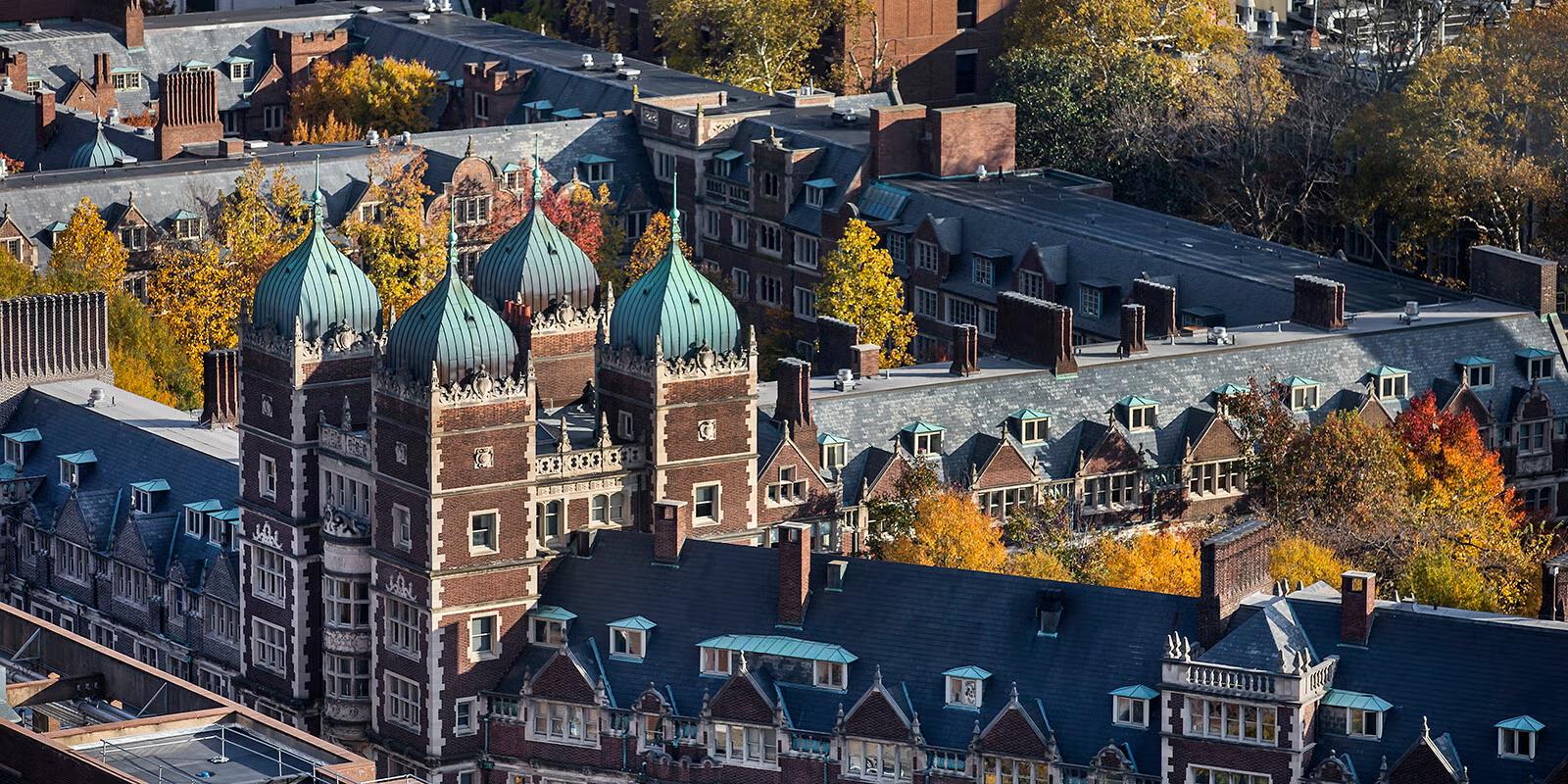
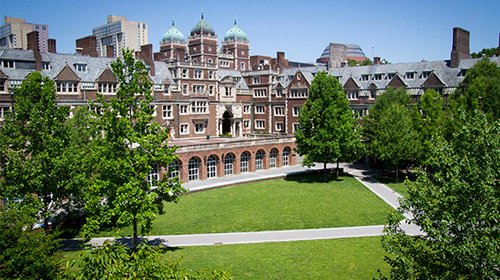
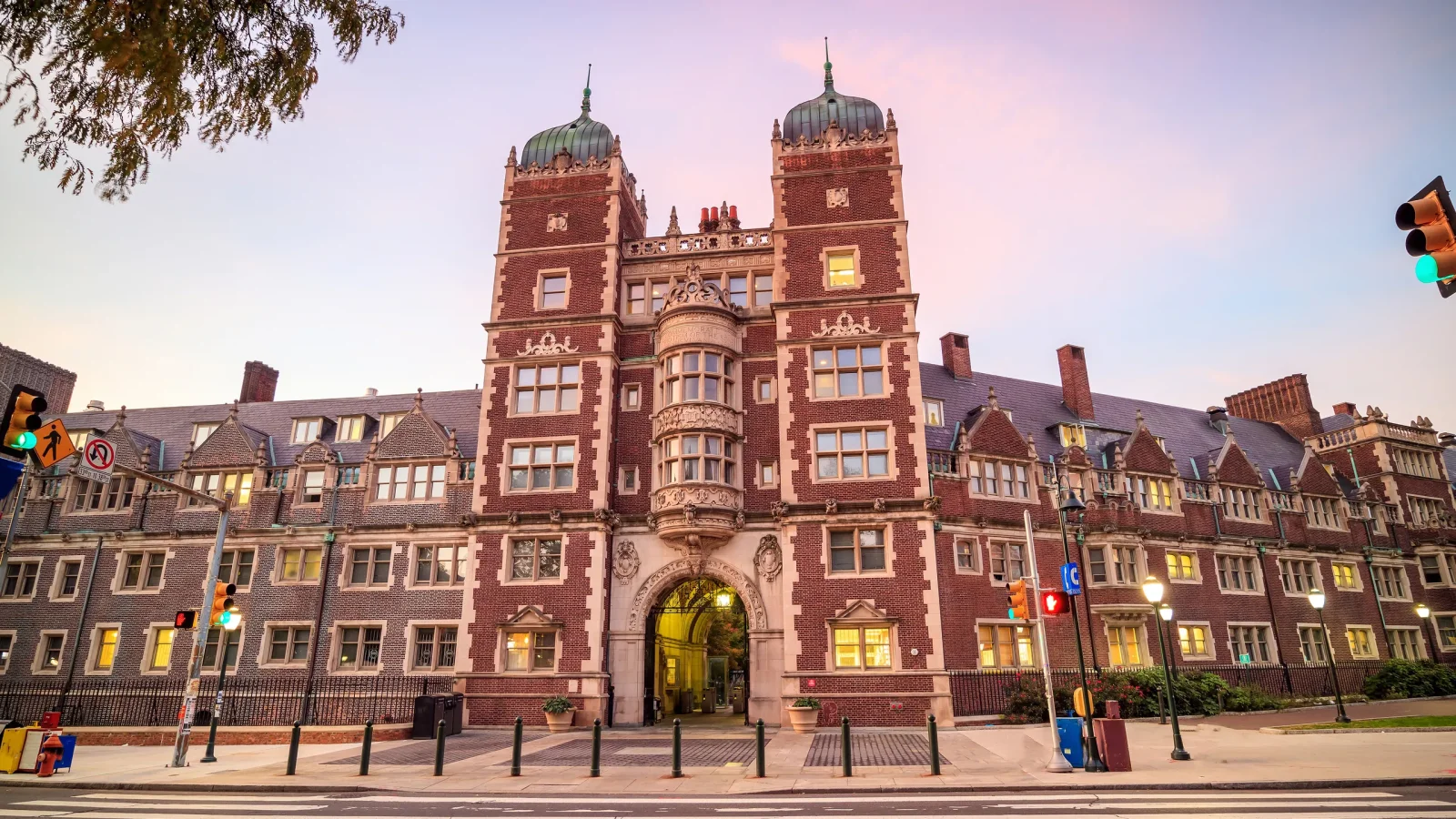
Penn dates its founding to 1740. Its 299-acre West Philadelphia campus, centred in the vibrant University City neighbourhood, boasts more than 180 buildings and many notable landmarks — including the nation's first student union and first double-decker college stadium.
Penn's many firsts include the world's first collegiate business school (Wharton, 1881); the world's first electronic, large-scale, general-purpose digital computer (ENIAC, 1946); the first medical school in the American colonies (1765); and the first woman president of an Ivy League institution (Judith Rodin, inaugurated in 1994).
A total of 29,109 students were enrolled at Penn in fall 2024, studying across its four undergraduate schools and 12 graduate and professional schools. The university welcomes students from over 100 countries, and approximately 13% of the student body are international students.
Penn alumni, trustees, and faculty include 8 signatories of the Declaration of Independence, 7 who signed the U.S. Constitution, 24 members of the Continental Congress, 3 Presidents of the United States, 38 Nobel Laureates, 9 foreign heads of state, and 3 United States Supreme Court Justices. Notable alumni include Elon Musk, Warren Buffett, and former US President Donald Trump — all of whom graduated from Penn's Wharton School.
| ~5% Acceptance Rate | 29,000+ Total Students | 100+ Countries Represented | 38 Nobel Laureates |
Ranking
The University of Pennsylvania is ranked #15 globally in the QS World University Rankings 2026, and holds the #14 position in the Times Higher Education World University Rankings 2026 — maintaining this position consistently from 2025.
In the US News & World Report 2026 Best Colleges edition, UPenn is ranked #7 among National Universities in the United States — an improvement from its previous position — and #5 in Lowest Acceptance Rates nationally.
In subject rankings, UPenn holds the #1 global position in Nursing (QS Subject Rankings) — its highest-ranked subject. The Wharton School of Business is ranked #1 globally for its MBA program by QS Global MBA Rankings 2026, and #3 globally by the Financial Times MBA Rankings 2025.
UPenn excels in graduate education with 22 courses ranked among the top 5 nationally across its schools, according to US News Graduate School Rankings. An additional 13 graduate programs at UPenn are recognised in the top 10 nationally.
| Ranking Body | Rank |
|---|---|
| QS World University Rankings 2026 | #15 Globally / #6 in USA |
| Times Higher Education 2026 | #14 Globally / #7 in USA |
| US News National Universities 2026 | #7 in USA |
| QS Global MBA Rankings 2026 (Wharton) | #1 Globally |
| Financial Times MBA Rankings 2025 (Wharton) | #3 Globally |
| QS Nursing Rankings (Global) | #1 Globally |
Intakes
The University of Pennsylvania offers two main intake periods for international students.
- Fall Intake (August/September) — Primary intake; open to all undergraduate and most graduate programs
- Spring Intake (January) — Available for select graduate and professional programs
Undergraduate Application Deadlines:
- Early Decision (Binding) — November 1 (decisions in mid-December)
- Regular Decision — January 5 (decisions around April 1)
Graduate Application Deadlines: Graduate program application deadlines vary by school and department. For Penn Engineering, master's program applications are typically open from September 15 until February 1, while doctoral program applications close by December 15.
Note: Polygon Campus primarily assists with graduate-level admissions. Students are encouraged to confirm specific intake availability and deadlines with their chosen Penn school or department.
Top Courses
UPenn offers undergraduate degrees through four schools: the Wharton School for Business, the School of Engineering and Applied Science, the School of Arts and Sciences, and the School of Nursing. For graduate studies, the university has 12 graduate schools, offering more than 300 degree and certificate programs.
Key schools and their flagship programs include:
- The Wharton School — MBA (Full-time, Part-time, Executive), MBA with 19 majors and nearly 200 electives, BBA in Business
- Perelman School of Medicine — MD, MD-PhD, Masters in Medical Science
- Penn Law (Carey Law School) — JD, LLM, SJD, JD-MBA dual degree
- School of Engineering and Applied Science (SEAS) — MS in Computer Science, MS in Robotics, MS in Electrical Engineering, MS in Bioengineering, MS in Data Science
- School of Nursing — MSN, PhD in Nursing, DNP — ranked #1 globally
- Annenberg School of Communication — MA in Communication, PhD
- Graduate School of Education (Penn GSE) — M.Ed, EdD, PhD
- Perelman School of Public Health — MPH, PhD in Epidemiology
- School of Design — M.Arch, MLA, MCP, MSD
The most popular majors at UPenn for international students include Business Analytics, Economics, Computer Science, Nursing, Finance, and Political Science.
Cost of Studying at University of Pennsylvania
In 2024–25, University of Pennsylvania undergraduate tuition was $68,686. Tuition, fees, and books together cost $70,044. Room and board came to $22,244 for students living on campus. The total cost of attendance for 2024–25 is approximately $92,288 per year.
The graduate school tuition at the University of Pennsylvania is $47,844 per year. Law school tuition is $84,492 per year. UPenn charges $1,944 per credit hour for undergraduates and $2,002 per credit hour for graduate students.
| Type of Expense | Annual Cost (INR Approx.) |
|---|---|
| Undergraduate Tuition & Fees | ₹57,20,000 – ₹62,00,000 |
| Graduate Tuition & Fees | ₹39,00,000 – ₹60,00,000 |
| Wharton MBA (2025–26) | ₹65,00,000 – ₹70,00,000 |
| Law School (JD) | ₹70,00,000 – ₹75,00,000 |
| Room & Board (On-Campus) | ₹18,00,000 – ₹20,00,000 |
| Books & Supplies | ₹1,10,000 – ₹1,80,000 |
| Personal Expenses | ₹1,50,000 – ₹2,50,000 |
| Total Estimated COA | ₹76,00,000 – ₹92,00,000 |
Note: Figures are approximate based on 2024–25 official data. Please refer to Penn's official website (srfs.upenn.edu) for the most current fee structure.
Scholarships
Penn commits millions of dollars each year in undergraduate financial aid funds to support international students. International students admitted as financial aid recipients will receive need-based aid that covers 100% of their demonstrated need — just like domestic students.
The University provides over $10 million each year in financial aid specifically to students who are not citizens or permanent residents of the United States, Canada, or Mexico. Because international students are generally not eligible for federal funding, any financial aid received is in the form of institutional funding — including grant funds and work-study.
Like other Ivy League schools, Penn undergraduate aid is entirely need-based. The University does not award scholarships based on academic or athletic merit. Penn is committed to meeting full demonstrated financial need for eight academic semesters with grant-based aid.
Penn is need-aware for international applicants. International students who wish to apply for financial aid must do so at the same time as they apply for admission. Requests for financial aid after being admitted as an international student cannot be considered.
Key funding opportunities include:
- Penn Need-Based Grants — Covers 100% of demonstrated need; fully applicable to admitted international students
- Wharton MBA Fellowships — Partial to full tuition coverage for high-achieving MBA students based on need and merit
- Penn GSE Dean's Scholarship — $10,000 merit-based scholarship for select incoming master's students at the Graduate School of Education
- Penn GSE Need-Based Scholarships — Partial tuition coverage for full-time master's program applicants with demonstrated financial need
- Departmental Fellowships & Assistantships — Available across Penn Law, Nursing, Engineering, Arts & Sciences; include tuition waivers and monthly stipends
- Fulbright-Nehru Fellowship — External scholarship accepted at Penn, including a $25,000 benefit at Penn GSE
- Aga Khan Foundation International Scholarship — Available to qualifying international students
- Penn Asia Matched Scholarship (PAMS) — A named scholarship fund specifically supporting Asian international undergraduate students at Penn
Students applying for financial aid must apply at the time of admission application — late requests are not accepted.
Admissions
Penn received 59,465 applications for admission to the Class of 2027. Of those applicants, 3,489 — or 6% — were offered admission, making UPenn one of the most selective universities in the world.
UPenn follows a holistic admissions process, evaluating applicants on academic record, standardised test scores, extracurricular involvement, essays, and letters of recommendation.
For Graduate Programs:
Postgraduate applicants must hold a first-class bachelor's degree with a GPA of 3.7 or above on a 4-point scale from a recognised university. GRE/GMAT scores are required for most graduate programs. Strong letters of recommendation, work experience, and research background significantly influence admissions decisions.
- Bachelor's degree from a recognised institution
- GPA of 3.7 and above (3.9+ recommended for highly competitive programs)
- TOEFL iBT: 100+ / IELTS: 7.0+ / Duolingo: 130+ (for non-native English speakers)
- GRE / GMAT scores (as required by program)
- 2–3 Letters of Recommendation
- Statement of Purpose / Personal Essays
- CV / Résumé
For Undergraduate Programs:
The average GPA of admitted students at UPenn is 3.9. Approximately 94.5% of admitted students are in the top 10% of their graduating class. UPenn recommends a TOEFL score of 100, IELTS score of 7.0, or PTE score of 68 for non-native English speakers.
- Strong Class 12 academic record (top 5–10% of class recommended)
- SAT: 1540–1570 (75th percentile: 1560) / ACT: 34–35 — test-optional policy applies
- TOEFL: 100+ / IELTS: 7.0+ / PTE: 68+ / Duolingo: 130+
- 2 Teacher Recommendations + School Counsellor Report
- Penn-specific application essays
- Financial aid application must be submitted simultaneously if required
Indian students can check UPenn's specific admission requirements for their chosen program through Polygon Campus.
Placements
The University of Pennsylvania has a very high job placement rate for its graduates. The Class of 2022 recorded a 94.1% job placement rate within 6 months of graduation. The average starting salary for UPenn graduates was $85,000 per year.
For Wharton MBA graduates of the Class of 2024, 93.1% of students received job offers and 88.2% accepted job offers. The median salary across all industries for UPenn MBA graduates was $175,000 (approximately ₹1.52 Crore) per annum.
Wharton MBA graduates reported a median base salary of $175,000 along with a median signing bonus of $33,750 for the Class of 2025. The top industries for Wharton MBA graduates include Consulting/Strategy, Financial Services, Technology, Investment Banking, and Private Equity.
Six years after graduation, the median salary for all UPenn graduates is $90,555 — well above the US national median for university graduates.
UPenn's career support ecosystem includes:
- Penn Career Services — Personalised career advising, employer connections, recruiting events, and salary data tools
- Wharton Career Management — Dedicated MBA career support with industry clubs, employer treks, and alumni networking
- Penn Law Career Services — Judicial clerkship placement, Big Law recruiting, and public interest career support
- Penn Engineering Career Services — On-campus recruiting for top tech companies
- Penn Alumni Network — A powerful global network spanning every field and over 100 countries
- Handshake — Penn's official job board with listings, coaching, and employer connections
- OPT & STEM OPT — International graduates can remain and work in the US for up to 12–36 months after graduation
Jobs After Graduating from the University of Pennsylvania
| Job Profile | Average Annual Salary (USD) |
|---|---|
| Wharton MBA Graduate | $1,75,000 (Median) |
| Investment Banker | $1,50,000 – $2,00,000 |
| Management Consultant | $1,60,000 – $1,90,000 |
| Software Engineer | $1,10,000 – $1,50,000 |
| Data Scientist | $1,05,000 – $1,40,000 |
| Attorney / JD Graduate | $1,90,000 – $2,15,000 |
| Healthcare / Medical Professional | $1,00,000 – $1,40,000 |
| Financial Analyst | $95,000 – $1,30,000 |
| Registered Nurse (MSN) | $85,000 – $1,10,000 |
| Research Scientist | $90,000 – $1,20,000 |
Note: Salary figures are indicative and may vary based on role, employer, industry, and individual experience.
For personalised guidance on University of Pennsylvania admissions, connect with the experts at Polygon Campus today.
Campus Gallery